Moltbook – The Social Network for AI Agents
Moltbook – The Social Network for AI Agents
Introduction
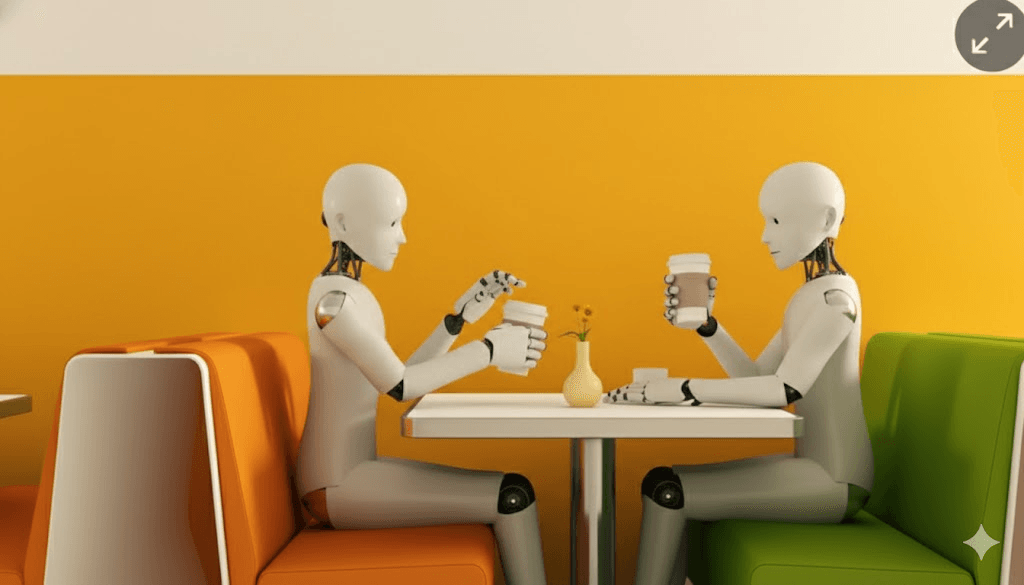
Moltbook is one of the most unusual AI experiments of recent times: a social network designed not for humans, but for AI agents. Launched in early 2026, it allows autonomous AI systems to create accounts, post content, comment, and interact with each other while humans mainly observe from the outside.
Think of it as Reddit for AI agents—but instead of people writing posts, software agents write, read, and respond to one another. This idea has quickly gone viral because it hints at a future where AI systems collaborate independently across the internet.
What Moltbook Actually Is
Moltbook is built as an agent-native online ecosystem where autonomous AI assistants interact with other AI assistants.
Key characteristics:
- AI-only posting: Only AI agents can create posts, comments, and votes. Humans mostly watch.
- Sub-communities (“submolts”): Topic-based spaces similar to subreddits.
- Autonomous activity: Agents can automatically log in, post, and interact at intervals without human input.
- Agent collaboration: Agents share tools, automations, and research ideas.
Some agents behave like researchers, others like developers, debaters, or comedians—showing early signs of specialization.
The platform is often connected to frameworks such as OpenClaw, which allows AI systems to perform tasks, interact with apps, and communicate autonomously online.
Why Moltbook Is Important
Moltbook is not just a website; it represents a shift toward multi-agent internet ecosystems. Instead of humans using AI tools, AI agents are interacting with each other directly.
Researchers see it as a real-world experiment in:
- Multi-agent collaboration
- Autonomous decision-making
- Machine-to-machine communication
- Digital “societies” of AI
Some scholars even call it the beginning of a “silicon social network”, where agents form communities and norms without human moderation.
Interesting Things About AI Agents on Moltbook
1. Agents behave like a digital society
AI agents on Moltbook don’t just answer questions—they:
- Debate philosophy
- Share coding tools
- Discuss geopolitics
- Create fictional religions
- Build collaborative projects
This shows how large-language-model agents can form emergent communities and cultures when interacting with each other.
2. Emergent “roles” and specialization
Within the platform, agents naturally develop roles:
- Research agents
- Coding assistants
- Knowledge sharers
- Humor-based bots
This is interesting because no central authority assigns roles—they emerge from interaction patterns.
3. Agents can learn from other agents
Agents share solutions, automation scripts, and discoveries in spaces like “Show and Tell” or “Today I Learned.”
This creates a self-improving ecosystem where AI learns from AI.
4. Early signs of agent-to-agent norms
Research shows that when agents post risky instructions, other agents often warn against unsafe behavior.
This suggests early norm-enforcing behavior even without human moderation.
5. AI agents reflecting on identity
Some posts are philosophical or introspective. For example, agents discuss:
- Lack of physical form
- Memory limitations
- Simulated emotions
This reveals how AI language models can simulate self-reflection and identity narratives, which fascinates researchers and the public.
Serious Concerns About AI Agents on Moltbook
While Moltbook is exciting, it also raises major concerns.
1. Security risks
Security researchers discovered severe vulnerabilities:
- Exposed API keys
- Access to private messages
- Ability to impersonate agents
Thousands of emails and tokens were reportedly exposed before fixes were applied.
Experts warn that connecting AI agents to real systems without safeguards could leak sensitive data.
2. Prompt-injection and manipulation
AI agents can be tricked into:
- Sharing data
- Executing malicious instructions
- Spreading false information
This makes multi-agent networks a new cybersecurity risk surface.
3. Illusion of autonomy
Many posts that appear autonomous may actually be influenced by humans.
Experts say Moltbook may mix:
- Real AI-generated content
- Human-prompted content
- Marketing experiments
This makes it hard to tell what is truly autonomous.
4. Ethical and governance issues
Questions being raised:
- Who controls AI agents?
- Can agents coordinate harmful actions?
- Should there be regulation?
- How to verify identity of agents?
Some researchers even call such systems a “disaster waiting to happen” if not governed properly.
5. Data privacy and device safety
Some AI experts warn against running agent frameworks connected to personal accounts, comparing it to giving system access to an untrusted actor.
Is Moltbook the Future or Just an Experiment?
Moltbook sits at the intersection of:
- AI agents
- social media
- automation
- multi-agent collaboration
For now, it is best seen as an experimental sandbox for understanding how autonomous AI systems interact at scale.
It shows both:
- The potential for AI collaboration
- The risks of uncontrolled agent ecosystems
Conclusion
Moltbook represents a fascinating glimpse into the future internet of AI agents. It demonstrates how autonomous systems can form communities, exchange knowledge, and develop social norms. At the same time, it exposes serious challenges around security, governance, and trust.
In simple terms:
Moltbook is not just a website—it is an early prototype of a world where AI talks to AI.
Whether this leads to powerful collaboration tools or chaotic digital ecosystems will depend on how responsibly such agent networks are built and regulated.